A lump that looks like a lipoma is not automatically suitable for routine removal. You will learn how a surgeon assesses it, when imaging or biopsy matters, how anaesthesia and the operating setting are chosen, what happens during excision, and what recovery involves.
Key takeaways
- Rapid growth, pain or deep fixation requires careful assessment before removal.
- The surgeon and anaesthesia team choose local or general anaesthesia together.
- Size, depth and location determine the incision, scar and surgical risks.
- Seek help for fever, worsening pain, spreading redness or persistent bleeding.
How does a surgeon confirm that the lump is suitable for removal?
A surgeon confirms suitability by taking the lump’s history and examining it. They ask how long it has been present, whether growth is slow or rapid, and whether it causes pain, pressure or repeated irritation.
They assess whether it is soft or hard, mobile or fixed, superficial or deep, and connected to nearby muscle, nerves or blood vessels.
Observation is reasonable when a small lump has the typical features of a superficial lipoma and causes no symptoms. Removal becomes reasonable for pain, pressure, restricted movement, repeated irritation, cosmetic concern, diagnostic uncertainty or rapid change.
Warning signs require assessment before routine excision:
- Rapid enlargement, hardness, fixation or significant pain
- Deep or intramuscular position, recurrence after earlier removal, or a location near major nerves or blood vessels
- A size of about 5 cm or more
The 5-cm threshold is a referral warning, not proof of cancer.
| Test | What it clarifies | When it is useful |
|---|---|---|
| Ultrasound | Whether a superficial lump is fatty, solid, cystic or vascular | A readily felt mass close beneath the skin |
| MRI | Depth, muscle involvement and relationships with nerves or vessels | A deep, large, recurrent or anatomically complex lesion |
| Core-needle biopsy or other tissue diagnosis | The actual cell type | Atypical, fixed, painful, rapidly growing or uncertain masses before excision |
Choose a lipoma surgeon in Mumbai who explains why observation, imaging, biopsy or surgery is appropriate instead of treating every lump as routine.
What happens before lipoma surgery, and who decides the anaesthesia?
The consultation starts with an examination and measurement of the lump. The surgeon reviews previous operations and any recurrence, asks about allergies and medical conditions, and checks every medicine and supplement you take.
Name aspirin, clopidogrel, warfarin, apixaban and other blood thinners explicitly. The operating team decides whether and when to adjust them; never stop a prescribed blood thinner independently.
Consent covers the planned incision and possible extension of dissection, pathology testing, scar, bleeding, infection, seroma, numbness and recurrence. Ask Dr Vipul Nandu which risks apply to your lump and who will provide the pathology result.
The choice depends on size, depth, number of lesions, body location, medical history and expected dissection difficulty.
| Option | What it means | Practical arrangements |
|---|---|---|
| Local anaesthetic | You stay awake while the area is numb | Often suits a small, accessible lump |
| Sedation | You become relaxed or drowsy while the area is numbed | Arrange the escort required by the facility; do not drive afterward |
| General anaesthesia | You are unconscious in an operating theatre | Follow fasting instructions and arrange post-anaesthesia transport |
Lipoma surgery in Mumbai may occur in an outpatient clinic, day-surgery unit or hospital. Deep, multiple or difficult lesions can shift the plan toward theatre-based care, and the facility will give specific fasting and medication instructions. Ask these questions before booking.
Related service
Lipoma Surgery Lipoma surgery is a minor surgical procedure performed to remove a lipoma, which is a benign (non-cancerous) fatty tumor that usually grows slowly... View service → |
What happens during the lipoma removal procedure?
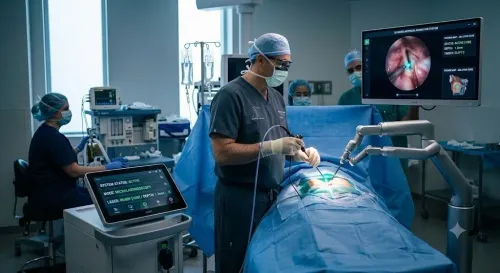
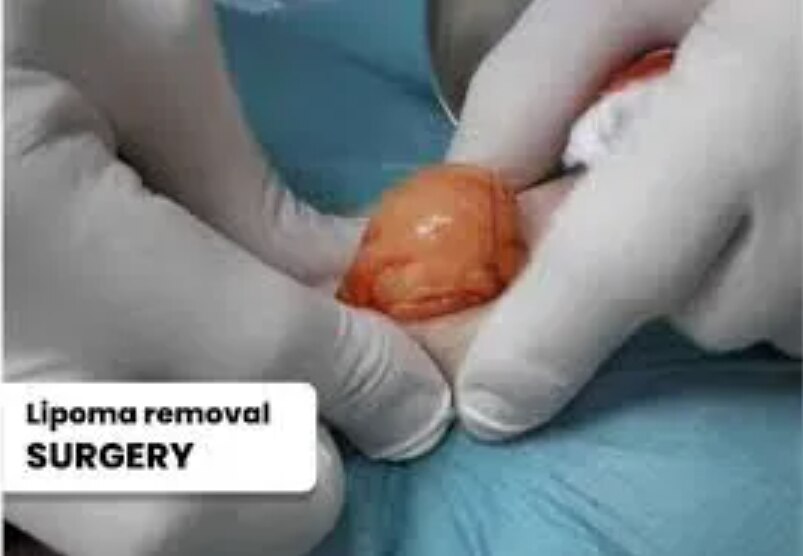
The lipoma removal procedure begins with the surgeon confirming the site, marking the lump and positioning you so the area is fully accessible.
1. The skin is cleaned with an antiseptic, and sterile drapes are placed around the operating field.
2. With local anaesthesia, injections numb the skin and deeper tissues. The surgeon tests the area and waits for adequate numbness before making an incision over or near the lump.
3. The fatty mass is separated from surrounding tissue through careful dissection. The surgeon removes the capsule too when this is safe and practical.
4. Bleeding is controlled, the cavity is checked, and the wound is closed with sutures. A deeper wound may need more than one layer.
The removed tissue should generally undergo histopathological examination, especially when it is large, deep, recurrent, atypical or diagnostically uncertain. Visual inspection alone cannot reliably distinguish every fatty tumour from an ordinary lipoma.
| Approach | Main advantage | Main limitation |
|---|---|---|
| Conventional excision | Removes the mass and provides a more complete specimen | Leaves a surgical scar |
| Liposuction | Can reduce the scar for a selected soft, superficial lesion | May leave the capsule or part of the mass |
Liposuction is a poor choice for a firm, deep, adherent or uncertain lump. A common lump under the skin is not normally removed laparoscopically. Laparoscopic or gastrointestinal surgery applies to selected masses inside the abdomen or gastrointestinal tract, after separate imaging and specialist assessment.
How do size, depth and location change the incision, scar and risks?
A lump’s visible diameter does not predict the surgery underneath. A small, superficial lipoma may need only a short incision, while a larger, deep, intramuscular or adherent mass can require MRI planning, wider dissection and a hospital-based operation.
Size, depth and location affect the approach:
| Feature | Possible surgical effect | Main concern |
|---|---|---|
| Small, soft and superficial | Short incision and limited dissection | Bruising, pain and a visible scar |
| Large, deep or intramuscular | Longer incision, wider dissection and sometimes general anaesthesia | Seroma, bleeding and muscle injury |
| Near nerves, blood vessels or a joint | Incision follows a safe access route and may cross skin-tension lines | Numbness, weakness, vessel injury or wound stress |
The surgeon also considers muscle compartments and the direction of skin tension. A scar placed along natural tension lines often heals more neatly; an incision under tension can widen or separate.
Short-term effects include bruising, pain, bleeding, haematoma, infection and wound separation. Nerve traction or injury can cause temporary or persistent numbness. A seroma is a pocket of clear fluid that can form in a larger cavity.
Complete excision of an ordinary lipoma makes local recurrence uncommon, but retained tissue can allow it to return. Removing one lump does not prevent others developing later. Firm, fixed, recurrent or diagnostically uncertain masses are poor candidates for cosmetic liposuction alone because it can leave the capsule or an incomplete specimen.
Conventional lipoma removal surgery in Mumbai is safer for establishing complete removal and diagnosis.
What should you expect after surgery and when should you seek help?
Most patients leave after an outpatient or day-case procedure once staff have observed them and confirmed that recovery is satisfactory. You will receive pain-relief advice, wound-care instructions, and a clear time for changing or removing the dressing.
- Keep the wound clean and dry exactly as instructed. Do not soak it or apply creams unless the surgical team approves.
- Wait for the surgeon’s permission before strenuous activity, lifting or exercise. Take extra care when the incision lies near a joint or across skin under tension, because movement can pull the wound apart.
- Arrange the escort specified by the facility if you received sedation or general anaesthesia. Do not drive until the operating team clears you.
Contact the surgical team rather than waiting for a routine appointment if you develop:
- Increasing redness, warmth or swelling
- Pus or fever
- Worsening pain
- Persistent bleeding
- Rapidly expanding swelling
- Wound separation
- New weakness or numbness
Attend follow-up for wound review, suture removal and the histopathology result. If the report does not match a simple lipoma, the surgeon should explain the finding and arrange further examination, imaging, biopsy or specialist assessment.
Before leaving, ask who will contact you with the pathology result and which number to call after lipoma removal surgery in Mumbai.
Frequently asked questions
How does a surgeon confirm that a lump is suitable for lipoma removal?
The surgeon asks how long the lump has been present, whether it is growing slowly or rapidly, and whether it causes pain, pressure or repeated irritation. They examine its size, mobility, consistency and depth. Rapid growth, firm fixation, neurological symptoms or uncertainty about the diagnosis can require imaging or tissue testing before removal.
Who decides the anaesthesia for lipoma surgery?
The surgeon recommends the procedure and discusses the anaesthesia options with you. The anaesthetist assesses your health, medications, allergies and the operation’s size and location before confirming whether local, regional or general anaesthesia is appropriate.
What happens during a lipoma removal procedure?
After marking and preparing the site, the surgeon makes an incision over or near the lump, separates the lipoma from surrounding tissue and removes it. They control bleeding, close the wound with sutures or another closure method, and may send the specimen for laboratory examination.
How do size, depth and location affect lipoma surgery?
A small, superficial lipoma often needs a shorter incision and simpler closure. A large, deep or firmly attached lump can require a longer incision, more dissection, imaging or a different anaesthetic plan. Locations near nerves, blood vessels, joints or the face require careful planning because injury and visible scarring carry greater consequences.
When should you seek help after lipoma removal surgery?
Contact your surgical team for fever, worsening rather than improving pain, spreading redness, increasing swelling, pus, wound separation or persistent bleeding. Seek urgent care for heavy bleeding, breathing difficulty, fainting or sudden weakness.
Keywords