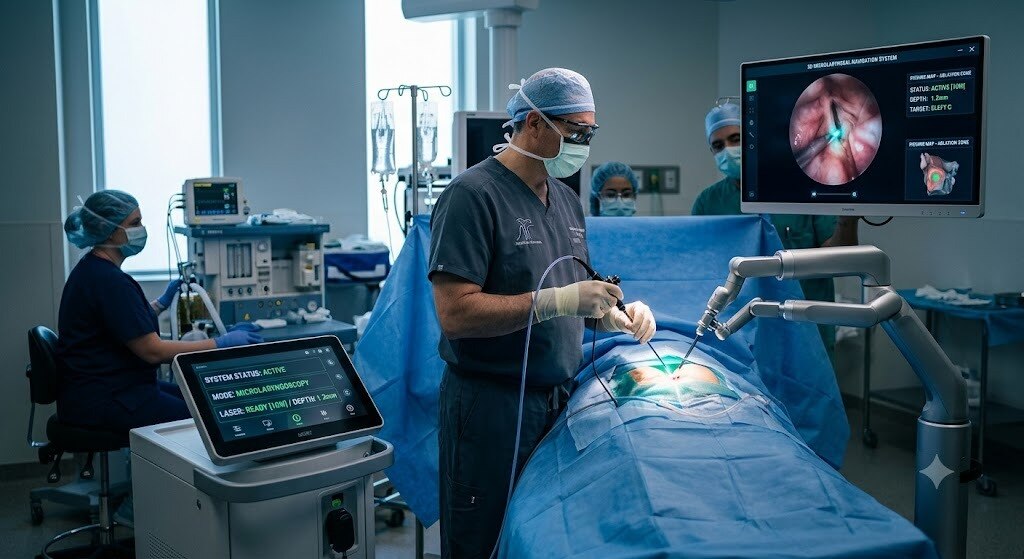
Pain during bowel movements does not automatically mean you need a laser procedure. You will be able to distinguish an acute fissure from a chronic one, recognise warning signs that need investigation, and compare laser treatment with established operations before choosing a surgeon.
Key takeaways
- Persistent symptoms beyond six to eight weeks need assessment for chronic fissure.
- Confirm the diagnosis before choosing elective fissure surgery.
- Compare laser treatment with lateral internal sphincterotomy and fissurectomy.
- Ask about the surgeon’s experience, technique, risks and follow-up plan.
When does a fissure need an operation instead of medical treatment?
Symptoms lasting beyond six to eight weeks usually shift an anal fissure from acute to chronic. An acute fissure often heals with fibre, adequate fluids, stool softeners or laxatives, warm baths, topical anaesthetic, glyceryl trinitrate, topical calcium-channel blockers, or other prescription medicines. Persistent symptoms after appropriate treatment—not pain alone—usually starts the operation discussion.
| Acute fissure | Often recent and capable of healing with medical treatment | Symptoms improve as stools soften and internal sphincter spasm settles |
|---|---|---|
| Chronic fissure | Symptoms continue beyond six to eight weeks, or tears repeatedly return | Discuss surgery when medical treatment fails or severe spasm prevents healing |
| Chronic examination finding | Sentinel pile, hypertrophied anal papilla, exposed sphincter muscle, or a firm-edged wound | Supports chronic disease but does not, by itself, prove an operation is necessary |
Repeated tearing, severe internal sphincter spasm, or failure of a properly followed treatment plan strengthens the case for surgery. A clinician should inspect the anal margin and confirm the diagnosis before you book laser fissure surgery in Mumbai; extreme pain can make an examination under anaesthesia safer than repeatedly forcing an awake examination.
The availability of laser fissure surgery in Mumbai is not evidence that you need it. Ask what the proposed laser actually treats and why continued medical treatment is no longer suitable. Fever, pus, a tender swelling, heavy bleeding, weight loss, anaemia, or an atypical fissure also requires prompt assessment rather than elective surgery.
Which symptoms require diagnosis before elective fissure surgery?
Before elective laser surgery, a clinician should confirm that the tear is an anal fissure and identify why it has not healed. The assessment starts with your pain pattern, bleeding, bowel habit, discharge, fever, previous treatment, continence, and conditions such as inflammatory bowel disease or immune suppression.
Inspection of the anal margin may reveal the fissure, a sentinel pile, swelling, or pus.
A gentle digital rectal examination or anoscopy is appropriate when pain allows. Do not repeatedly force an awake examination through severe spasm: examination under anaesthesia can be safer, more complete, and more informative.
Arrange prompt assessment rather than routine laser booking if you have:
- Fever, pus, discharge, or a tender perianal swelling
- Heavy bleeding, weight loss, or anaemia
- A lateral, multiple, unusually large, painless, or recurrent fissure
- Diarrhoea, known inflammatory bowel disease, or immune suppression
Symptoms can overlap with other conditions:
| Condition | Clues that change the assessment | Typical next step |
|---|---|---|
| Fissure | Sharp pain during or after stool; visible linear tear | Inspect and examine gently |
| Piles | Bleeding or a lump without the classic tearing pain | Anoscopy when tolerable |
| Fistula or abscess | Persistent discharge, opening, swelling, fever, or escalating pain | Urgent examination; drainage may be needed |
| Crohn disease or infection | Multiple or lateral fissures, diarrhoea, discharge, or immune suppression | Bowel, infection, or immune evaluation |
| Anal cancer | Firm irregular lesion, persistent bleeding, weight loss, or an atypical wound | Specialist examination and biopsy assessment |
What are the actual anal fissure surgery options?
The four main anal fissure surgery options differ mainly in whether they relax the internal sphincter, remove the chronic wound, or cover it with new tissue.
| Option | What it means | When it applies |
|---|---|---|
| Lateral internal sphincterotomy | Divides part of the internal sphincter to reduce spasm | A chronic primary fissure after medical treatment has failed; a tailored or limited cut is considered when continence risk matters |
| Botulinum toxin injection | Temporarily relaxes the internal sphincter without cutting it | When temporary relaxation is preferred or sphincter division is undesirable; repeat treatment may be needed |
| Fissurectomy | Removes the chronic fissure bed and associated scarred tissue | When the persistent wound needs removal, often with another method to support healing |
| Advancement flap | Moves nearby healthy tissue over the fissure | When tissue coverage is needed or sphincter division carries substantial continence risk |
Lateral internal sphincterotomy often provides the most reliable healing for a chronic primary fissure, but it deliberately weakens muscle. Discuss alternatives carefully if you have incontinence, previous anal surgery, obstetric sphincter injury, inflammatory bowel disease, or other muscle damage.
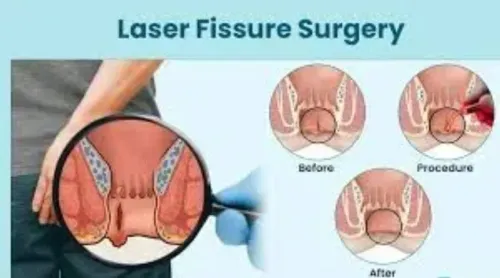
The phrase laser anal fissure surgery in Mumbai does not automatically identify a separate operation. It may mean laser-assisted treatment of the fissure bed, a fissurectomy, or another technique. Ask which tissue the laser treats, whether the internal sphincter is divided, and what evidence supports that exact procedure.
How does laser treatment compare with established fissure operations?
“Laser” describes equipment, not a proven outcome. Ask what it will do: ablate the fissure bed, perform a fissurectomy, or divide the internal sphincter. There is no general evidence that laser treatment is safer, heals faster, or prevents recurrence better than established operations.
| Option | Healing and recurrence | Pain and recovery | Continence trade-off |
|---|---|---|---|
| Laser treatment | Depends on the exact technique; persistent or recurrent fissures may need repeat treatment | Often day-care; pain and wound healing depend on tissue removed | No advantage unless long-term continence results exist for that technique |
| Lateral internal sphincterotomy | Often the strongest healing result for chronic primary fissure | Usually day-care, with early bowel movement and wound-care planning | Deliberately weakens the internal sphincter; flatus or stool-control problems can occur |
| Botulinum toxin | Temporary relaxation; recurrence or repeat injection is possible | Day-care, without cutting the sphincter | Avoids permanent division, but effect may wear off |
| Fissurectomy or advancement flap | Removes chronic tissue or covers a defect; selected cases need further treatment | Wound care can take longer | Useful when sphincter division carries substantial risk |
After any fissure operation in mumbai, keep stools soft and formed, drink fluids, use prescribed stool softeners, and avoid straining. Ask when to expect the first bowel movement and return to work, and what to do about bleeding, infection, urinary retention, or persistent pain.
Give extra weight to continence risk after obstetric sphincter injury, anal surgery, inflammatory bowel disease, existing incontinence, or other sphincter damage. A deep, lateral, atypical, recurrent, or unexplained fissure is a poor laser candidate until its cause is established.
How should you choose a fissure surgeon in Mumbai?
Choose a surgeon by the diagnosis and proposed operation, not by the availability of a laser package. A search for fissure surgeon Goregaon identifies a location, not a qualification.
Ask these questions at consultation:
- Was the fissure confirmed by inspection, and are chronic features present?
- How long have you used this exact technique, and how often do you perform it?
- Does the procedure divide any part of the internal sphincter?
- What comparative evidence supports it for chronic fissures, including recurrence and long-term continence?
- How will continence be assessed before surgery and during follow-up?
- What is the plan if the fissure persists or returns?
Verify the surgeon’s medical registration and training in general, colorectal, or proctological surgery. For a patient considering Dr Vipul Nandu, the useful discussion is the same: review fibre, stool regulation and prescription treatment already tried, then compare the proposed procedure with botulinum toxin, fissurectomy, or advancement-flap repair.
| Option | Key trade-off | Question to ask |
|---|---|---|
| Lateral internal sphincterotomy | Strong healing potential, but divides sphincter muscle | Is a tailored cut safer for my continence risk? |
| Botulinum toxin | Relaxes the sphincter without permanent division | What happens if relaxation is temporary? |
| Flap repair | Covers the wound without cutting the sphincter | Why is tissue coverage preferable here? |
Request a written recovery and complication plan covering bowel movements, wound care, work, bleeding, urinary retention, infection, pain, and incontinence. Decide from symptom duration, position, chronic features, baseline continence, obstetric or anal-surgery history, bowel disease, and treatment response—not a laser label.
Related service
laser Fissure surgery Fissure surgery is a medical procedure performed to treat anal fissures, which are small tears in the lining of the anus that can cause pain,... View service → |
Frequently asked questions
When does an anal fissure need an operation instead of medical treatment?
Surgery enters the discussion when symptoms persist beyond six to eight weeks despite appropriate medical treatment, or when the fissure is chronic and repeatedly returns. Pain alone does not determine the need for an operation.
Which symptoms require diagnosis before elective fissure surgery?
Persistent or recurrent anal pain, bleeding, a visible tear, a sentinel skin tag, discharge, a lump, atypical fissure location or changes in bowel habit require clinical assessment before elective surgery. These findings can indicate another condition.
What are the actual anal fissure surgery options?
Options include lateral internal sphincterotomy, fissurectomy and selected procedures that use advancement flaps or botulinum toxin. The choice depends on chronicity, sphincter tone, previous treatment and continence risk.
How does laser treatment compare with established fissure operations?
Laser treatment is not automatically safer or more effective than established operations. Ask what tissue the technique treats, whether it divides the internal sphincter, what evidence supports it and how the surgeon manages recurrence and continence risk.
How should you choose a fissure surgeon in Mumbai?
Check the surgeon’s qualifications, experience with anal fissure procedures, explanation of alternatives, continence-risk assessment, facility standards and follow-up arrangements. Ask for a clear diagnosis and written estimate before scheduling surgery.
Keywords