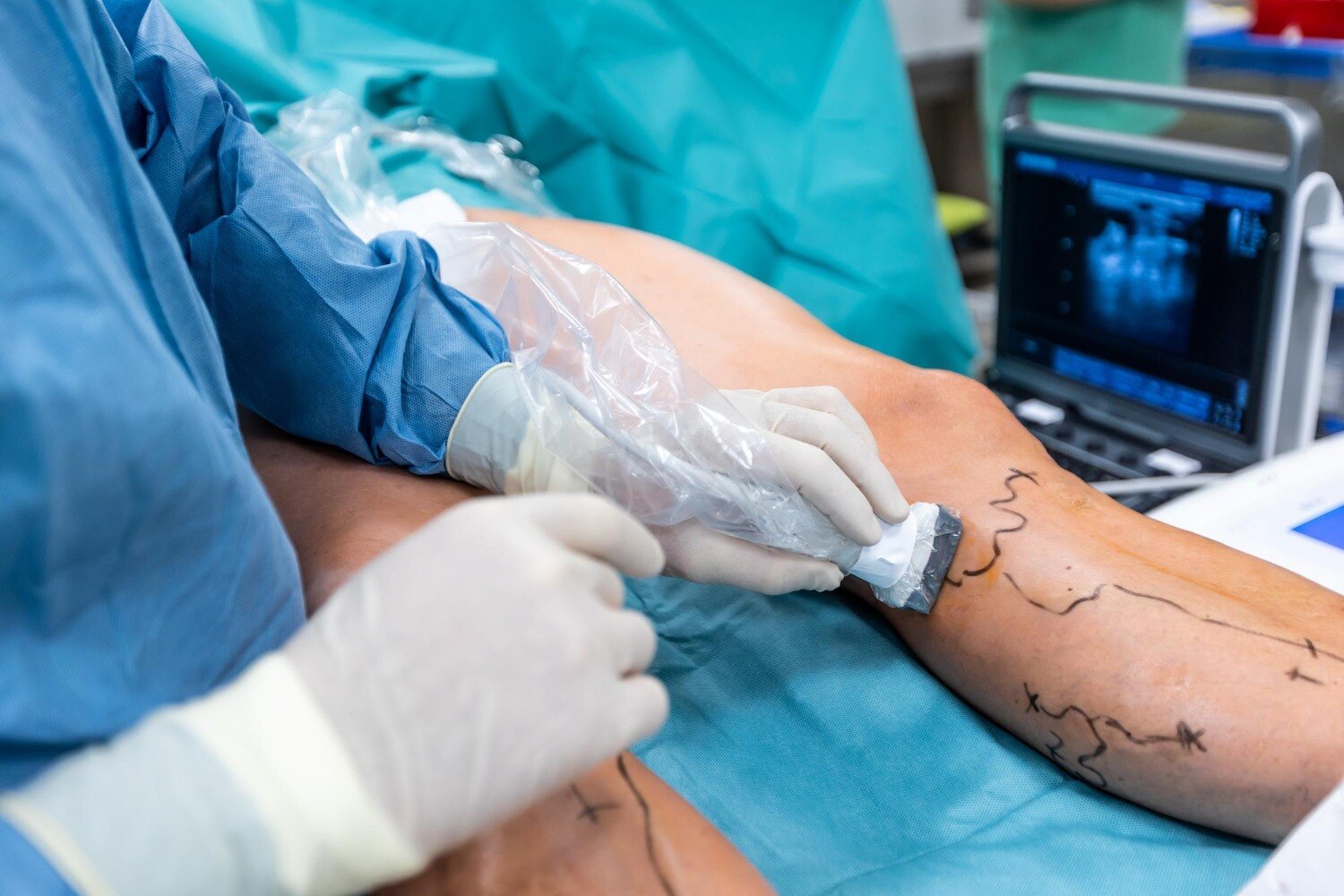
A laser procedure for varicose veins is not just the moment a fibre closes a vein. The complete pathway includes duplex mapping, a suitability assessment, preparation, ultrasound-guided treatment, compression and walking advice, follow-up imaging, and a plan for branches or complications that laser treatment does not address alone.
Key takeaways
- Confirm reflux with a duplex Doppler ultrasound before treatment.
- Ask which vein will be treated and why laser is suitable.
- Arrange loose clothing, transport home and prescribed compression wear.
- Seek urgent care for chest pain, breathlessness or sudden leg swelling.
What happens before laser treatment is approved?
Treatment approval starts with a vascular consultation, leg examination and duplex Doppler ultrasound. For laser varicose vein surgery in Mumbai, a visible bulging vein is not enough to select treatment.
The surgeon reviews aching, swelling, heaviness, itching, skin discolouration and ulcers. Duplex identifies refluxing veins and checks for deep-vein obstruction or thrombosis, while mapping shows whether reflux affects the great saphenous vein, small saphenous vein or another superficial segment. It also shows whether surface branches connect to the faulty vein.
You will be asked about previous vein procedures, pregnancy or recent childbirth, blood clots, bleeding disorders, medicines, hormone therapy and peripheral arterial disease. Skin changes, ulcers, lymphoedema and coexisting arterial disease can change the plan.
Confirmed truncal reflux that suits endothermal treatment is commonly considered for EVLA or EVLT. If the anatomy makes thermal treatment unsuitable, other options may fit better:
| Option | What it involves | When it may apply |
|---|---|---|
| EVLA or EVLT | Laser energy closes the refluxing truncal vein from inside | Confirmed truncal reflux suitable for endothermal treatment |
| Ultrasound-guided foam sclerotherapy | Foam closes the faulty vein under ultrasound guidance | Thermal treatment is unsuitable |
| Ambulatory phlebectomy or conventional surgery | Removes or treats selected veins by another technique | Anatomy or branch-vein disease requires an alternative |
- The duplex report and the name of the vein with reflux
- The proposed treatment and which veins it targets
- The reason alternatives are or are not suitable
What does the laser procedure itself include?
Endovenous laser ablation uses ultrasound guidance throughout. After the leg is cleaned and numbed, the surgeon punctures the selected vein and advances a thin catheter or laser fibre to the planned treatment point.
Tumescent local anaesthesia is injected around the vein. This fluid numbs the area, separates the vein from nearby tissue and helps protect the skin from heat. You remain awake unless sedation is separately arranged.
As the fibre is withdrawn at a controlled rate, laser energy heats the vein wall and seals the refluxing segment from inside.
The treated vein stays in place rather than being pulled out. Blood reroutes through healthier veins.
| Treatment scope | What the laser does | What may need another method |
|---|---|---|
| Main target | Closes an incompetent great or small saphenous vein | — |
| Bulging tributaries | May remain after laser closure | Ambulatory phlebectomy or ultrasound-guided foam sclerotherapy |
| Spider veins | Does not treat them as truncal reflux | Separate cosmetic treatment |
| Deep-vein disease | Does not treat it with a superficial laser fibre | Requires a different vascular assessment |
Laser vein surgery in Mumbai usually refers to this endovenous technique, not removal of every visible vein. A varicose vein operation in Mumbai can also mean radiofrequency ablation, foam sclerotherapy, phlebectomy or traditional surgery. Confirm which veins are being treated, which methods are included and whether remaining branches will need a separate procedure.
How should you prepare, and what happens on the day?
Before the appointment, give the surgeon a complete medicine list. Include aspirin, warfarin, apixaban, rivaroxaban, clopidogrel, supplements and hormone therapy. Do not stop an anticoagulant or antiplatelet drug without explicit instructions.
1. Report allergies to local anaesthetics, antiseptics, dressings or medicines. Mention any previous reaction to anaesthesia, including breathing difficulty, severe nausea or an unexpected drug response.
2. Most procedures under local anaesthesia do not require fasting. Follow the clinic’s fasting instructions if sedation is planned. Wear loose trousers or clothing that will fit over a compression stocking, and arrange transport if you receive sedation or are told not to drive.
3. The appointment commonly includes consent, marking the leg, ultrasound-guided access, tumescent local anaesthesia, laser-fibre withdrawal to close the faulty vein, and a dressing. The treatment time depends on the number and length of veins treated, so ask how long you should remain at the facility.
4. Clarify whether ambulatory phlebectomy or ultrasound-guided foam sclerotherapy for surface branches is included that day or planned later. Laser closure does not automatically remove every visible varicosity.
5. Before leaving, obtain written instructions covering walking, medicines, compression, bathing, work and exercise. Keep the urgent-problem contact number. A search for varicose vein laser treatment Goregaon identifies a location, not a different preparation or procedure.
What should recovery feel like, and when is it urgent?
Most patients are encouraged to walk soon after treatment, because regular walking supports circulation and is not replaced by strenuous exercise. Mild bruising, tenderness, tightness, a cord-like feeling along the treated vein, tingling or temporary numbness can occur during early recovery.
1. Follow the prescribed compression plan; do not assume every patient needs the same stocking or duration. Keep dressings dry for the period specified by the clinic.
2. Ask when you can resume desk work, driving, running, weight training, swimming and hot baths. The answer depends on the treated veins, anaesthesia and your work.
3. Attend the recommended follow-up. A duplex ultrasound may confirm closure and check whether clot has extended into the deep venous system.
4. Contact the treating team promptly for increasing swelling, severe or escalating pain, fever, wound discharge, spreading redness or heavy bleeding. Seek emergency care for chest pain, sudden breathlessness, coughing blood or fainting.
Before consenting to laser varicose vein surgery in Mumbai, discuss superficial thrombophlebitis, deep-vein thrombosis, pulmonary embolism, bleeding, infection, skin burn, nerve irritation, pigmentation and temporary or persistent sensory change. The treated segment can recanalise, untreated branches can remain, and new varicose veins can develop.
How do you choose the right laser vein surgeon in Mumbai?
Choose a laser varicose vein surgeon who explains your duplex findings in plain language and names the refluxing vein, such as the great or small saphenous vein. Ask which fibre, energy method and anaesthesia are planned, and why that choice fits your anatomy.
Ask the clinic:
- How do you assess previous thrombosis, immobility, cancer, obesity, pregnancy or postpartum status, and hormone therapy before deciding whether clot prevention is needed?
- Are ultrasound guidance, sterile technique, emergency support and follow-up duplex scanning available?
- Who will manage persistent symptoms, skin changes, ulcers, thrombosis or recurrent veins after treatment?
| Option | What it involves | When it may apply |
|---|---|---|
| EVLA | Laser fibre closes the refluxing vein under tumescent local anaesthesia | Suitable superficial truncal reflux |
| Radiofrequency ablation | Catheter heat closes the vein without laser energy | Comparable endothermal alternative |
| Foam sclerotherapy | Ultrasound-guided foam seals selected veins | Smaller, residual or unsuitable veins |
| Phlebectomy | Branch veins are removed through tiny skin openings | Bulging tributaries remain after truncal treatment |
| Traditional surgery | Ligation and stripping remove the faulty vein | Anatomy or circumstances make endovenous treatment unsuitable |
Varicose vein laser treatment Goregaon identifies a location, not a different technique; apply the same checks across Mumbai. Dr Vipul Nandu can be considered when you want examination, duplex findings and alternatives connected in one plan, but documented reflux and your medical history matter more than the word “laser”.
Related service
laser Varicose Vein Surgery Laser varicose vein surgery is a minimally invasive procedure used to treat varicose veins, which are enlarged, twisted veins that commonly appear in... View service → |
Frequently asked questions
What happens before laser varicose vein treatment is approved?
A vascular surgeon examines your legs and reviews a duplex Doppler ultrasound to identify reflux, the affected vein and suitable treatment options. A visible bulging vein alone does not determine treatment.
What does laser varicose vein surgery include?
The procedure usually involves marking the vein, applying local anaesthetic, inserting a thin laser fibre through a catheter and using heat to close the faulty vein under ultrasound guidance. Your surgeon will explain whether additional treatment is needed for branch veins.
How should you prepare for laser vein surgery in Mumbai?
Follow the clinic’s instructions about medicines, food and bathing, wear loose clothing, arrange transport if sedation is used and bring any prescribed compression garment.
What should recovery feel like after laser varicose vein surgery?
Mild bruising, tightness, tenderness and a pulling sensation along the treated vein are common. Walking is usually encouraged, but follow your surgeon’s limits on exercise, driving and compression wear.
When is recovery after laser vein surgery urgent?
Contact your surgical team promptly for worsening pain, spreading redness, fever, heavy bleeding or a cold or discoloured foot. Seek emergency care for chest pain, breathlessness or sudden leg swelling.
Keywords