The right operation depends on what is happening beneath and around the wound: infection, dead tissue, bone involvement, blood supply, pressure, deformity and your overall ability to heal. By the end, you will know which findings require same-day assessment, which tests guide the decision, how the main procedures differ and what to ask before consenting to surgery.
Key takeaways
- Seek same-day assessment for spreading infection, dying tissue or severe blood-flow loss.
- Ask for checks of circulation, sensation, wound depth and bone involvement.
- Compare debridement, revascularisation and amputation according to the actual cause.
- Choose a surgeon who can coordinate infection, vascular and wound-healing care.
Start with the diagnosis and the urgency
The foot needs same-day hospital assessment when infection is spreading, tissue is dying, blood flow is severely reduced, or the patient is systemically unwell. A clean, shallow ulcer that improves with pressure relief, dressings, glucose management and appropriate antibiotics when infection is present does not automatically need surgery.
Seek urgent assessment for:
- Spreading redness, warmth or swelling
- Pus, foul odour, black or blue tissue
- Fever, chills or other systemic illness
- Severe pain, new numbness or rapidly increasing swelling
- Exposed tendon or bone, an enlarging wound, or suspected deep abscess
- Gangrene, possible necrotising infection or severe limb ischaemia
Choosing diabetic foot surgery in Mumbai starts with diagnosis, not the wound’s appearance or a promise to avoid amputation. The clinician needs to establish whether the ulcer is clinically infected, how deep it is, whether bone is involved, and whether arterial blood flow can support healing.
A positive superficial swab does not prove infection; infected wounds are better assessed with recently debrided tissue, while suspected osteomyelitis may require a bone specimen.
Surgery later becomes relevant when a wound fails to heal despite off-loading and wound care, or when deformity keeps placing pressure on the same area. The operation might remove dead tissue, drain an abscess, remove infected bone, restore blood flow or correct the pressure source.
If there is no infection, dead tissue, bone involvement or correctable structural problem, surgery may add harm rather than healing. Fever, gangrene, deep infection or severe ischaemia should not wait for a routine outpatient appointment.
Check blood flow, nerve damage and the depth of the wound
A small ulcer can hide poor circulation, infected bone or pressure from a deformity. Before recommending an operation, clinicians must establish whether the foot can heal, how far disease has travelled and what caused the wound.
1. Check arterial supply. Examine pulses and use Doppler assessment, ankle-brachial index and, when arterial calcification makes that result unreliable, toe pressure or transcutaneous oxygen measurement. Severe ischaemia may require vascular imaging and revascularisation before, or alongside, foot surgery.
2. Measure protective sensation. A 10-g monofilament test, vibration testing and assessment of numbness show whether you will feel pressure, footwear damage or a new ulcer after surgery. Persistent loss of sensation makes off-loading and long-term footwear planning essential.
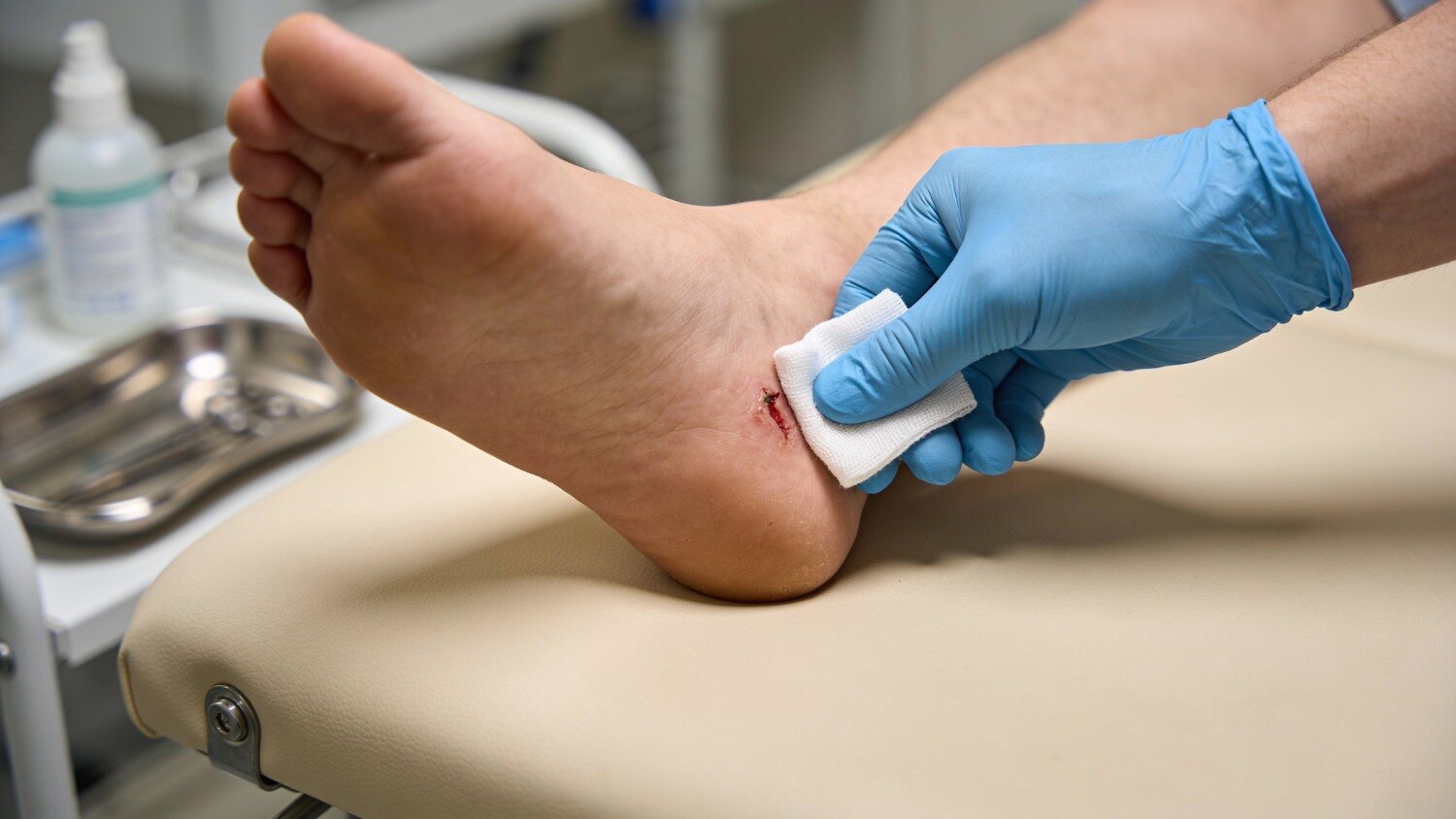
3. Map the wound’s depth. Record its size, undermining, exposed tendon, joint or bone, and whether a probe reaches bone. Use X-ray for gas, deformity or obvious bone destruction; order MRI when deeper infection or osteomyelitis remains uncertain.
4. Confirm infection rather than treating a culture result alone. Spreading redness, warmth, swelling, pus, fever, gangrene or systemic illness needs urgent hospital assessment. For an infected ulcer, recently debrided tissue is more useful than a superficial swab; suspected osteomyelitis may require a bone sample.
5. Ask for the post-operative plan during a diabetic foot surgery consultation in Mumbai: wound reviews, weight-bearing limits, off-loading, glucose management, footwear or orthotics and surveillance for recurrent ulceration. Include vascular, infectious-disease, diabetes and wound-care expertise when the case is complex.
Compare the diabetic foot operation options in Goregaon
A search for diabetic foot operation options goregaon is only a starting point: the wound’s depth, infection, blood supply, dead tissue, bone involvement and deformity determine the operation. A clean, superficial ulcer may need off-loading and dressings, not surgery; spreading infection needs prompt source control.
| Option | What it does | When it applies |
|---|---|---|
| Sharp debridement | Removes dead or infected tissue while preserving viable skin, muscle and bone. | Non-viable tissue or a clinically infected wound needs removal; it does not automatically mean amputation. |
| Incision and drainage | Opens and empties an abscess or deep collection. | Pus is trapped under the skin or in deeper compartments. |
| Bone excision | Removes infected bone and sends a suitable specimen for culture. | Osteomyelitis is localised and enough healthy foot can remain. |
| Toe or ray amputation | Removes one toe, or the toe and its supporting metatarsal. | Gangrene, destroyed bone or infection is confined to that ray. |
| Transmetatarsal amputation | Removes the forefoot across the metatarsals. | Several toes or the forefoot are unsalvageable, but the heel and rear foot remain viable. |
| Below-knee amputation | Removes the foot and lower leg below the knee. | Infection or ischaemia cannot be safely contained in the foot, with healing potential assessed. |
| Revascularisation | Restores arterial flow using angioplasty, stenting or bypass. | Poor circulation blocks healing or threatens viable tissue. |
| Tendon, bone or reconstructive surgery | Corrects pressure-producing deformity or rebuilds a stable, plantigrade foot. | Recurrent ulcers persist after infection control and pressure relief. |
Before consent, obtain a plan for wound reviews, weight-bearing, off-loading, glucose control, footwear and recurrence surveillance. Ask whether vascular, infection, imaging and rehabilitation support are available.
Choose a surgeon and consultation that can manage the whole problem
Choose a surgeon who can coordinate the wound, infection, blood supply, diabetes and pressure problem rather than offering an operation based on appearance alone. A diabetic foot surgeon in Mumbai should explain who will assess arterial circulation, bone involvement and infection, and where you would go for urgent admission if the foot deteriorates.
Before consenting, check:
- The surgeon’s registration and training in relevant foot, general, vascular or reconstructive surgery.
- Access to hospital imaging, microbiology, vascular intervention, anaesthesia and inpatient monitoring.
- A clear distinction between debridement, abscess drainage, revascularisation and amputation.
- A written aftercare plan covering wound reviews, antibiotics when indicated, glucose control, weight-bearing limits, off-loading and footwear.
- Follow-up for pressure points and new ulcers after healing.
If you consult Dr Vipul Nandu, ask these questions directly rather than treating the clinic address as evidence that it can manage a limb-threatening case.
| Check | What to verify | Why it matters |
|---|---|---|
| Registration and training | Medical registration and relevant surgical experience | Confirms basic professional credentials |
| Team access | Vascular, diabetes, infection and wound-care support | One operation cannot correct every cause |
| Hospital pathway | Admission, imaging, cultures and emergency surgery | Delays can allow infection or ischaemia to spread |
| Aftercare | Off-loading, footwear, wound review and ulcer surveillance | Healing without pressure control invites recurrence |
Choose a diabetic foot treatment surgeon Goregaon patients can reach quickly, but prioritise capability over location. Spreading redness, fever, gangrene, foul drainage, exposed bone or severe pain requires same-day hospital assessment, not a routine clinic appointment.
Related service
Diabetic Foot Surgery Diabetic foot surgery is a specialized surgical procedure aimed at treating complications of diabetes that affect the feet. View service → |
Judge limb salvage, amputation level and healing prospects together
The better recommendation is not the one that removes the least tissue. It is the one that controls infection, preserves a weight-bearing shape, has enough blood flow to heal, and prevents the next ulcer.
When choosing diabetic foot surgery in Mumbai, compare both plans against the same facts: viable tissue, bone infection, arterial supply, pressure points, deformity, kidney and heart health, and your ability to follow off-loading and wound-care instructions.
| Option | What it achieves | Function and healing question |
|---|---|---|
| Debridement or abscess drainage | Removes infected or dead tissue while preserving viable structures | Can the remaining foot heal after blood flow and pressure are corrected? |
| Toe, ray or transmetatarsal amputation | Removes non-viable tissue at a lower level | Will the shortened foot bear weight, or will imbalance create another ulcer? |
| Below-knee amputation | Removes a severely infected or non-healing foot | Is blood supply adequate, and can you use a prosthesis safely and consistently? |
| Revascularisation with limb salvage | Restores arterial flow before or with wound treatment | Does improved perfusion make healing realistic, and is infection still controlled? |
Ask each surgeon to show the proposed level on your foot and explain what tissue will remain, how it will bear weight, and what happens if the wound fails to heal. A smaller amputation is a poor victory if it leaves painful pressure, recurrent breakdown or residual bone infection.
Before consent, demand a written plan covering wound reviews, weight-bearing limits, off-loading, glucose management, footwear or orthotics, and ulcer surveillance. Spreading infection, gangrene, fever, deep abscess or severe ischaemia needs hospital assessment, not a routine second opinion.
Frequently asked questions
When does a diabetic foot problem need same-day hospital assessment?
Seek same-day assessment when infection is spreading, tissue is dying, blood flow is severely reduced, or the patient is systemically unwell. A clean, shallow ulcer improving with pressure relief, dressings and glucose management does not automatically need surgery.
What tests help determine the right diabetic foot operation?
The assessment should examine blood flow, nerve damage, wound depth and possible bone involvement. These findings help determine whether treatment needs wound debridement, vascular intervention, infection control or amputation.
What diabetic foot operation options are available in Goregaon?
Options depend on the diagnosis and can include removal of dead or infected tissue, procedures to restore blood flow, drainage of an abscess, and amputation when tissue cannot be saved.
How should you choose a diabetic foot surgeon in Mumbai?
Choose a surgeon who can assess the whole problem, coordinate vascular and infection care, explain limb-salvage alternatives, and discuss the expected healing process before surgery.
Keywords