You may be preparing for an unfamiliar test involving fasting, sedation and a flexible camera, while also wondering why your doctor ordered it and what the results will tell you. By the end, you will know how to prepare, what happens from registration through discharge, what sensations are normal, and which results or warning signs require follow-up.
Key takeaways
- Follow the unit’s fasting instructions and arrange an escort if sedation is planned.
- Tell the team about blood thinners, diabetes medicines, allergies and pregnancy.
- Biopsies can be taken during the GI scopy procedure without adding a separate operation.
- Do not drive until sedation has fully worn off and the unit permits discharge.
Why your doctor may order an upper GI scopy
Persistent upper-abdominal pain, repeated vomiting, troublesome reflux or difficulty swallowing can prompt an upper GI scopy in Mumbai. Your doctor may also recommend it when symptoms suggest bleeding or when tests show anaemia, unexplained weight loss or an abnormality on imaging.
- Black, tarry stools, vomiting blood or suspected gastrointestinal bleeding
- Food sticking in the throat or chest, painful swallowing or progressive reflux
- Suspected gastritis, peptic ulcer, narrowing, inflammation or a growth
- Persistent symptoms that have not improved with initial treatment
- An abnormal X-ray, CT scan or ultrasound that needs direct inspection
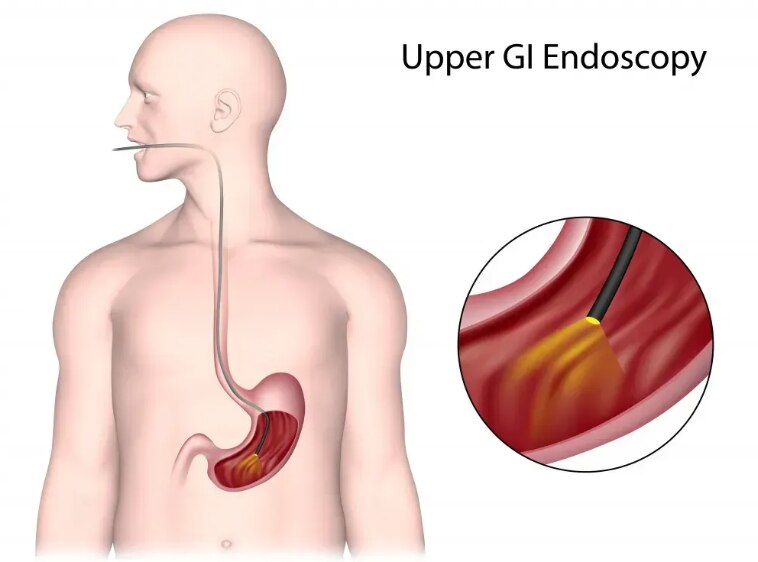
The examination, also called gastroscopy or oesophagogastroduodenoscopy (EGD), uses a flexible camera passed through the mouth to inspect the lining of the oesophagus, stomach and duodenum. It can identify ulcers, bleeding points, inflammation, tumours, strictures and some causes of swallowing difficulty.
The endoscopist can take tissue samples during the same examination. Biopsies may be needed to test for Helicobacter pylori, investigate unexplained anaemia, or assess coeliac disease and eosinophilic oesophagitis—even when the lining appears normal. A visual examination alone cannot confirm every tissue diagnosis.
A normal result does not exclude gallbladder or pancreatic disease, abdominal-wall pain or functional dyspepsia. Your doctor may need blood tests, ultrasound, CT, or another assessment for those conditions.
What to arrange before you arrive at the endoscopy unit
For an upper GI endoscopy in Mumbai, stop solid food and milk for at least 6 hours before the appointment. The unit may allow clear liquids such as water, clear oral rehydration solution or pulp-free apple juice until about 2 hours beforehand; follow the written instructions from your endoscopy team if they differ.
1. Send the unit a complete medicine list before the procedure. Include warfarin, apixaban, rivaroxaban, aspirin, clopidogrel, insulin, metformin and other diabetes medicines. Do not stop an anticoagulant or antiplatelet medicine yourself; the endoscopist and prescribing doctor must give you a timing plan.
2. Tell the team about medicine or latex allergies, pregnancy, sleep apnoea, previous sedation or anaesthesia problems, and serious heart or lung disease. Mention diabetes, delayed stomach emptying or vomiting, because these conditions can change fasting instructions.
3. Arrange an adult escort if intravenous sedation is planned. Confirm whether someone must stay with you after discharge, then arrange transport rather than driving yourself.
Sedation is not the same as general anaesthesia, but its effects can last through the day. After sedation, do not drive, operate machinery, drink alcohol or make important decisions; follow the unit’s instructions if supervision is required for longer. Bring your referral, identification, prior reports and the written medication list.
What happens during the gi scopy procedure
At registration, the endoscopy team confirms your identity, fasting status, medicines and allergies. You change into a gown, a nurse checks your blood pressure, pulse and oxygen level, and the doctor explains the gi scopy procedure before taking written consent.
- You lie on your left side with a mouth guard between your teeth. The team places monitoring leads and an oxygen sensor on your finger.
- The doctor sprays your throat with a local anaesthetic to reduce gagging. You may also receive intravenous conscious sedation; this relaxes you but is not general anaesthesia.
- You breathe normally while the flexible endoscope passes through your mouth into the oesophagus, not the windpipe. It does not block your breathing.
- The camera examines the oesophagus, stomach and duodenum. Air or carbon dioxide gently opens the folds so the doctor can see the lining.
- The doctor takes tiny biopsies when needed, including for Helicobacter pylori, unexplained anaemia, coeliac disease or eosinophilic oesophagitis. Tissue sampling can be necessary even when the lining looks normal.
- If consent covers treatment, the doctor may remove a polyp, widen a narrowed area, or control bleeding during the same examination. These interventions carry different risks from inspection alone.
The examination itself commonly takes 15–30 minutes, but consent, preparation, sedation recovery and discharge take longer. After sedation, you need an accompanying adult and must not drive; the team gives instructions before you leave.
What you feel, how long it takes and when you can leave
An upper gastrointestinal scopy in Mumbai usually causes pressure, gagging or bloating rather than sharp pain. Throat spray reduces discomfort, and intravenous sedation helps you relax or sleep. Biopsies are not usually felt because the lining does not sense cutting like skin. A sore throat, belching or abdominal fullness can continue briefly afterwards.
The camera examination usually takes 15–30 minutes. Your total visit takes longer because of consent, monitoring and recovery; sedation commonly adds another 30–60 minutes. Do not plan work, driving or important decisions for the rest of that day after sedation.
You can leave only after the endoscopy team confirms that:
- You are awake enough to follow instructions and your breathing, pulse and blood pressure are stable.
- The throat spray has worn off and you can swallow safely without choking.
- Any nausea, dizziness or pain is controlled, and you understand the written instructions.
- A responsible adult is available to take you home and stay with you after sedation.
The team may delay food and drink until swallowing returns. Arrange an escort before arriving; a taxi alone is not a substitute after sedative medicine. Contact the unit urgently for vomiting blood, black stools, severe chest or abdominal pain, fever, breathing difficulty or persistent vomiting.
How to understand the report and choose the right follow-up
The same-day report records what the endoscopist saw: the areas examined, visible inflammation, ulcers, bleeding, narrowing, polyps or a mass, plus any treatment performed. Ask when you will receive it and whether the team will explain each finding before you leave after an upper GI scopy in Mumbai.
| Finding | Usually available | What it tells you |
|---|---|---|
| Visible lining changes | During or soon after the examination | What the oesophagus, stomach and duodenum looked like |
| Biopsy result | After laboratory processing | Whether sampled tissue shows inflammation, infection, precancerous change or cancer |
| Helicobacter pylori result | After the test is processed | Whether H. pylori was detected in biopsy material or another sample |
A biopsy cannot be finalised by looking through the camera: the laboratory preserves, cuts and stains the tissue before a pathologist examines it. H. pylori testing also needs a laboratory reaction or microscopic assessment, so it does not belong in the visual report; ask for the expected reporting date.
Before leaving, confirm:
- Which areas were examined and were any parts difficult to view?
- Were biopsies taken, from where, and why?
- Was an H. pylori test performed, and which test was used?
- When and how will pathology results reach you?
- What treatment starts now, and what symptoms require urgent help?
- When should you review the findings?
For an upper GI endoscopy in Mumbai, Dr Vipul Nandu can help interpret the report alongside symptoms and decide whether medication, repeat testing or specialist treatment is appropriate. A normal scope still needs clinical follow-up if symptoms persist.
Related service
Upper GI Scopy also known as upper gastrointestinal endoscopy or esophagogastroduodenoscopy (EGD), is a diagnostic and therapeutic procedure used to examine the... View service → |
Frequently asked questions
Why might a doctor order an upper GI scopy?
Doctors use an upper GI scopy to investigate persistent upper-abdominal pain, repeated vomiting, reflux, difficulty swallowing, suspected bleeding, anaemia, unexplained weight loss or an abnormal imaging result.
What should you arrange before an upper GI scopy in Mumbai?
Follow the endoscopy unit’s fasting instructions, provide a complete medicine and allergy list, ask how to manage blood thinners and diabetes medicines, and arrange an escort if sedation is planned.
What happens during a GI scopy procedure?
The team checks your consent and medical history, numbs your throat or gives sedation, then passes a thin flexible camera through your mouth to examine the oesophagus, stomach and duodenum. They can take biopsies or treat some findings during the examination.
How long does an upper GI endoscopy take, and when can you leave?
The examination itself is usually brief, but recovery takes longer when sedation is used. You can leave when the unit confirms that you are alert, stable and able to follow its discharge instructions.
How should you follow up after the report?
Review the findings with the doctor who ordered the test. Ask what any biopsy result means, whether treatment or another test is needed, and which symptoms require urgent medical attention.
Keywords