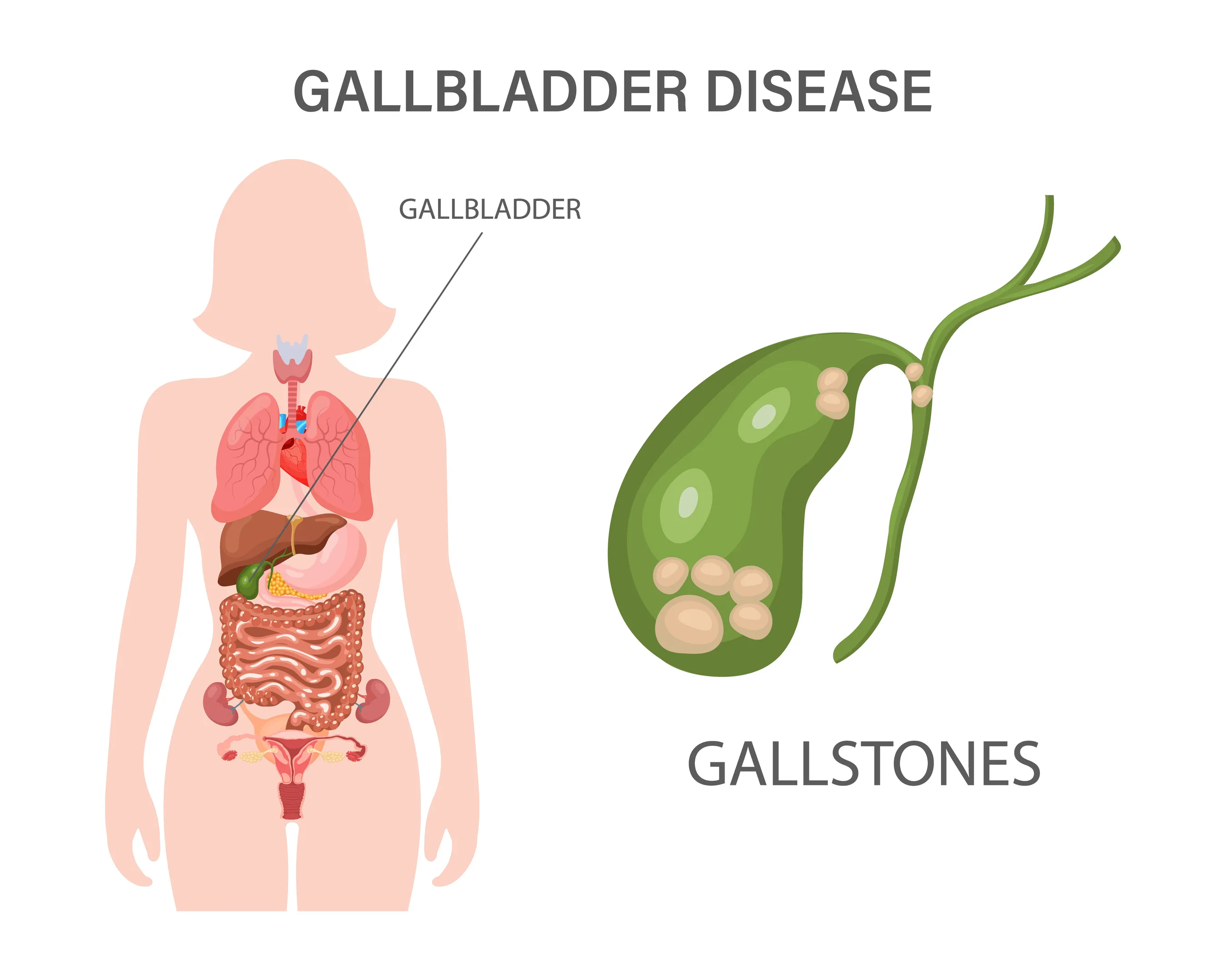
Gallstones are hardened deposits that develop inside the gall bladder. Many people have gallstones without experiencing symptoms, while others develop repeated episodes of pain or complications. Understanding this difference is important because the presence of a stone on an ultrasound does not by itself determine what treatment is required.
Gall Bladder Stone Disease commonly becomes noticeable when a stone interferes with the normal flow of bile. A typical episode may involve pain in the upper right or upper central abdomen, particularly after meals.
Other symptoms can include:
- Pain spreading toward the back or right shoulder
- Nausea or vomiting
- Bloating or digestive discomfort
- Recurrent pain after fatty meals
- Persistent upper abdominal tenderness if inflammation develops
Some people discover gallstones incidentally during an ultrasound performed for another reason. These cases need to be considered differently from symptomatic gallstones.
When can gallstones become more serious?
Gallstones can occasionally cause inflammation of the gall bladder, known as acute cholecystitis. Stones can also migrate into the bile duct and contribute to jaundice, infection or pancreatitis.
Severe or persistent abdominal pain, fever, repeated vomiting or yellowing of the eyes and skin should therefore be evaluated promptly.
A doctor usually considers symptoms together with examination findings and imaging. Ultrasound is commonly used to identify gallstones and assess the gall bladder. Blood tests may also be required, particularly when inflammation, infection or bile duct obstruction is suspected.
Is surgery needed for every gallstone?
Not necessarily. Treatment depends on whether the stones are causing symptoms, whether complications have occurred and the patient's overall medical condition.
When symptomatic gallstones require surgery, laparoscopic removal of the gall bladder may be recommended. During laparoscopic cholecystectomy, the gall bladder is removed through small abdominal incisions rather than a traditional large incision in suitable cases.
Patients should understand that removing only the stones while leaving the gall bladder in place is generally not the standard surgical approach for routine symptomatic gallstone disease. The treatment plan should be based on proper clinical assessment.
For people seeking evaluation in Goregaon, Maharashtra, Dr Vipul Nandu assesses gall bladder symptoms and available investigations before discussing whether observation, additional testing or surgery is appropriate.
Recurring upper abdominal pain should not automatically be labelled as acidity or indigestion. When symptoms repeatedly occur after meals or ultrasound has already identified gallstones, a focused evaluation can help establish whether the gall bladder is actually responsible.
Keywords