Persistent or recurrent discharge from a small opening near the anus may indicate an anal fistula. Some patients experience cycles in which swelling and pain improve after discharge, only for the same problem to return weeks or months later.
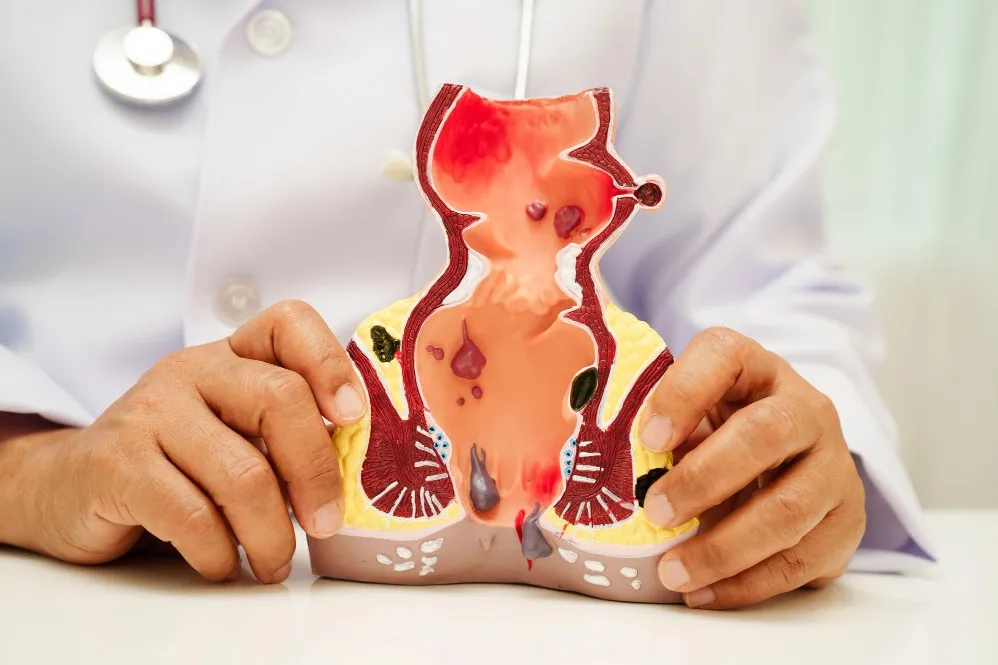
An anal fistula is an abnormal tract connecting the anal canal to the skin around the anus. It can develop after an anal abscess when a persistent channel remains after the infection drains.
Common signs include:
- Repeated pus or fluid discharge near the anus
- A small opening in the surrounding skin
- Recurrent swelling
- Pain that increases before discharge occurs
- Skin irritation
- Previous history of an anal abscess
Because symptoms can temporarily settle, patients sometimes believe that the condition has healed. Recurrence is one reason further evaluation may be required.
How is an anal fistula evaluated?
The surgeon usually begins with examination of the external opening and surrounding area. The location and complexity of the tract need to be understood before treatment is planned.
Some fistulas are relatively straightforward, while others have branches or pass through different portions of the anal sphincter muscles. Imaging, including MRI in selected cases, can help map complex fistula tracts.
This distinction matters because treatment needs to address the tract while also considering preservation of sphincter function.
Why can treatment differ from one patient to another?
There is no single procedure that is appropriate for every fistula. Surgical options vary according to the tract's anatomy, whether it is simple or complex, its relationship with the sphincter muscles, previous procedures and other medical conditions.
This is why selecting treatment solely on the basis of a procedure name can be misleading.
Patients should ask their surgeon:
- Where does the fistula tract run?
- Is it considered simple or complex?
- Are additional investigations required?
- Which procedure is being recommended and why?
- What recovery and wound care may be required?
Dr Vipul Nandu provides assessment for patients with fistula-related symptoms in Goregaon, Maharashtra, with treatment decisions based on examination and relevant investigations.
Recurrent discharge is particularly important to evaluate because temporary closure of the external opening does not necessarily mean the internal tract has resolved. If swelling repeatedly appears at the same location, especially after a previous abscess, a fistula should be considered among the possible causes.
Accurate mapping and diagnosis allow the surgical plan to be matched to the individual fistula rather than treating recurrent infection alone.
Keywords