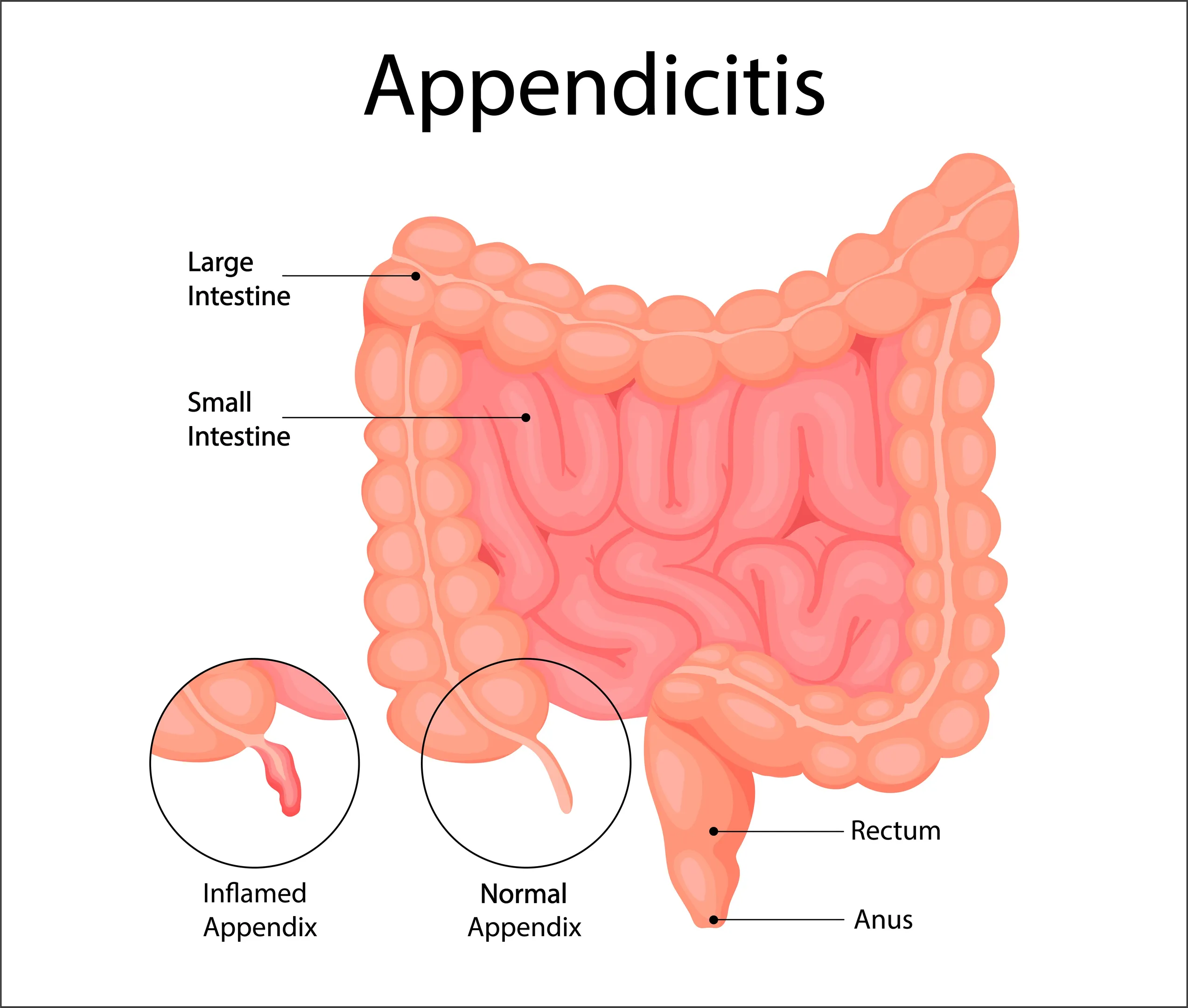
Appendicitis occurs when the appendix becomes inflamed. It can develop at almost any age and frequently begins with symptoms that resemble common digestive problems. Recognising the typical pattern is important because untreated appendicitis can progress and lead to complications.
One of the most familiar symptoms is abdominal pain. However, appendicitis symptoms do not always begin as sharp pain in the lower right abdomen. Discomfort may initially develop around the navel or central abdomen before gradually shifting toward the right lower side.
Common symptoms can include:
- Abdominal pain that progressively becomes stronger
- Pain moving toward the lower right abdomen
- Reduced appetite
- Nausea or vomiting
- Fever
- Abdominal tenderness
- Discomfort while walking, coughing or making sudden movements
- Changes in bowel habits in some patients
The exact presentation varies. Children, older adults and pregnant women, for example, may not always experience the classic symptom pattern.
Why does appendicitis require timely assessment?
An inflamed appendix can worsen if treatment is delayed. In some cases, perforation or formation of an abscess can occur. This is why increasing abdominal pain, particularly when associated with fever or vomiting, should be medically evaluated rather than repeatedly managed with home remedies or pain medicines.
Diagnosis usually combines the patient's symptoms with a physical examination. Blood tests and imaging such as ultrasound or CT may be required when the diagnosis is uncertain.
For people living in Goregaon and surrounding Mumbai suburbs, timely access to surgical assessment is particularly relevant when abdominal pain changes rapidly over several hours.
How is appendicitis treated?
Treatment depends on the clinical situation. Surgery to remove the appendix, known as an appendectomy, remains a commonly used treatment. In selected circumstances, management may differ depending on imaging findings, complications and the patient's overall condition.
When an operation is appropriate, laparoscopic appendectomy may be considered. It is performed through small incisions using a camera and specialized instruments. The surgeon determines whether this approach is suitable after assessing the individual case.
Dr Vipul Nandu evaluates patients with suspected appendicitis in Goregaon and plans further management according to clinical examination and investigation findings.
Abdominal pain has many possible causes, so symptoms alone cannot confirm appendicitis. What matters is recognising a concerning pattern. Pain that is worsening, localising to the right lower abdomen or occurring with fever, repeated vomiting or significant tenderness deserves timely evaluation.
Keywords